The Hidden Costs of Sitting: Why Your Body Feels Older Than It Should
Are daily aches and pains making you feel older than your years? Whether it’s a stiff lower back, creaky knees, or just an all-over sense of fatigue, getting older can start to feel like a slow surrender. Research shows that mobility limitations are among the most common reasons older adults reduce physical activity, yet inactivity is also a key contributor to accelerated aging (Paterson & Warburton, 2010), and feeling even more fatigued from lack of movement.
It’s discouraging when fatigue sidelines you from activities you love, or when you’re too drained to play with your kids or grandkids. If you’re tired of feeling trapped in an aging body, read on.
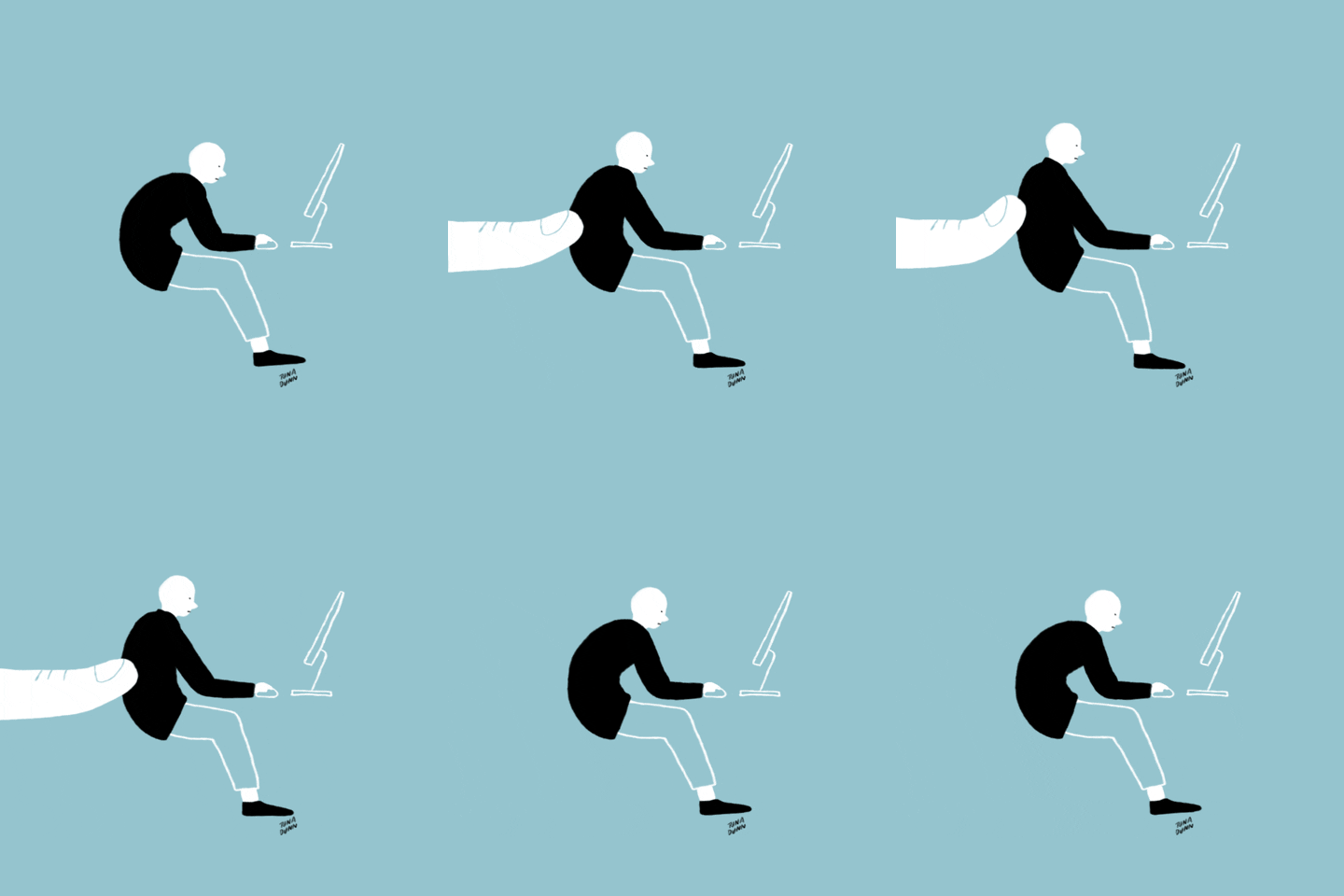
Add movement to your computer work
…or after a few hours sitting at your computer you might notice and say, hey wait a minute, I’ve been hunching over for hours now. I’ve got to stand up and move or take a walk around.
Worse yet, prolonged sitting and inactivity increases pressure on the lumbar discs by up to 90-150% compared to standing, especially when slouching (Healthline, 2022). This compression can lead to disc degeneration, herniation, or muscle fatigue, altering spinal alignment.
Over time, reduced lumbar support compression weakens the core, causing compensatory pelvic tilts (anterior or posterior) that disrupt and alter how we walk, all without us even noticing.
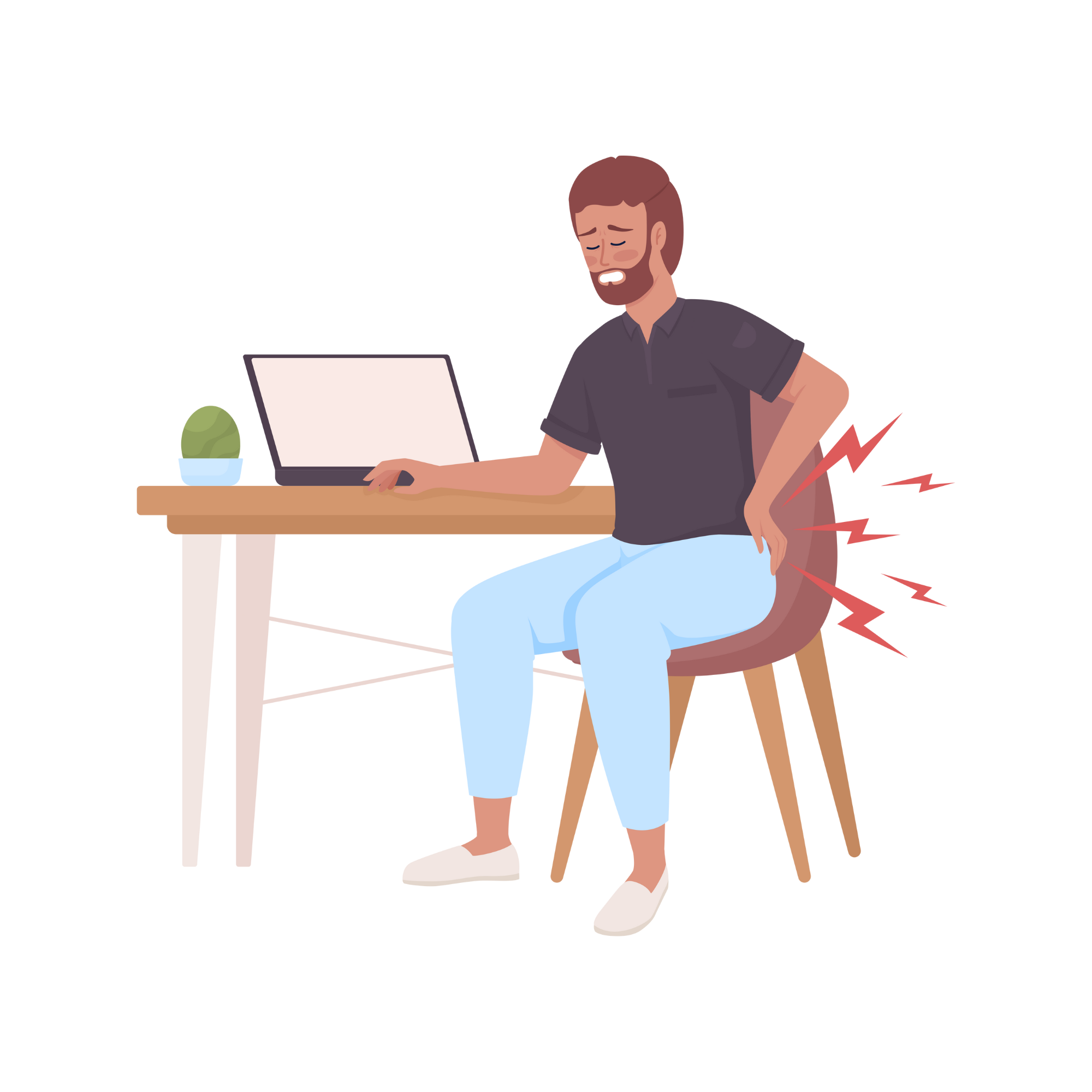
But it doesn’t stop there.
Sitting for 6+ hours day impairs lower limb blood flow and vascular function, which walking temporarily reverses. (6) However, chronic sitting reduces hip/ankle mobility, causing shorter strides and altered foot strike patterns. Stiffness in the lumbar spine and hips forces the body to adopt a "protective" gait, often characterized by reduced arm swing and uneven weight distribution. Your vascular system becomes sluggish, and your tissues don't get the oxygen-rich blood they need.
And if you've ever noticed yourself swinging your arms less when walking, or feeling off balance, it might be your body’s way of protecting itself. A stiff spine or tight hips can trigger what's known as a protective gait, your nervous system’s way of saying, “Let’s play it safe.” It reduces arm movement, narrows your stance, and shifts weight unevenly. Over time, this protective strategy becomes your new norm, and not a good one.
At the same time, your glutes and deep core muscles, those powerhouse muscles that stabilize your spine, start to weaken simply because they’re not being used. People often come to me with Sciatic pain and in order for me to address this, I need to get those glutes firing again through concentrated focus on how to reincorporate the glutes in my client's everyday lifestyle. This has taken me years to fully understand and then create multiple exercises suited for a variety of activity levels and capabilities that can be sustained long-term.
And when those muscles switch off, your body has to find a workaround. That’s when your lower back and hamstrings kick in to do jobs they weren’t designed to handle. This creates a chain reaction of stress throughout your body, leading to a stiff, unstable walking pattern and, more importantly, a higher risk of falls.
The good news? With the right movement, breathwork, and strength-building strategies, you can retrain your body to move more efficiently, restore mobility, and prevent the ripple effect of muscle imbalances from taking hold.
Here’s the truth: these issues aren’t just “part of getting older.” They’re mechanical consequences of how we live, and they’re absolutely reversible. Let’s stop blaming age for what might really be a sitting problem, and start moving in a way that keeps us strong, stable, and vibrant.
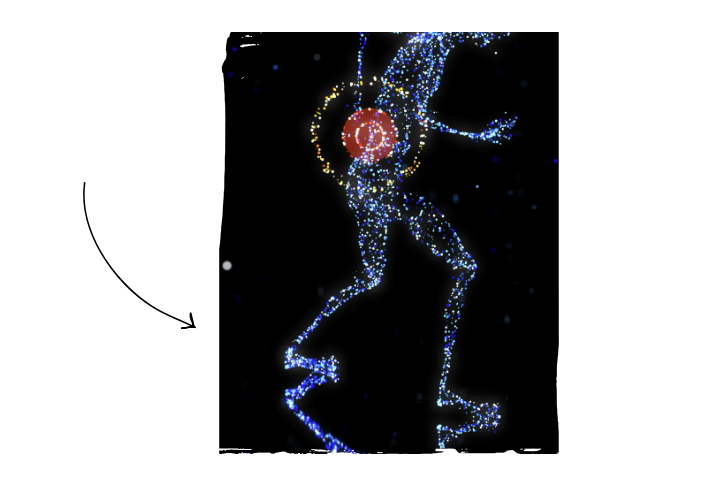
Renewed Strength and Mobility:
We begin by correcting the foundational imbalances caused by modern lifestyles. Prolonged sitting shortens your hip flexors and weakens your glutes, disrupting your posture and creating a stiff, unstable gait (Hinge Health, 2022). Our movement sequences gently lengthen and activate these key muscle groups, helping restore pelvic alignment and healthy walking mechanics.
By using low-impact strength exercises and restorative movement sessions, you’ll gradually rebuild the muscle support around your joints and increase flexibility. Harvard researchers note that strengthening and stretching are two of the most effective ways to relieve joint pain and regain function (Harvard Health, 2022).
Expert Coaching for Pain Relief:
Our group coaching isn’t a generic workout class, it’s led by an expert who understands biomechanics, injury prevention, and the impact of spinal misalignment. Slouching or forward leaning while sitting can cause anterior pelvic tilt, which shifts your center of gravity forward and contributes to overstriding, muscle strain, and chronic discomfort (Physio-Pedia, 2022). We spot these patterns and provide individualized corrections, so you learn to move better, not just harder.
Healing Through Breath and Balance:
We integrate breathwork and balance training because relieving pain isn’t just about building strength, it’s about restoring harmony in your nervous system and musculoskeletal structure. Controlled breathing reduces stress and improves mobility, while balance drills enhance joint stability and reactive strength (Jerath et al., 2006). You’ll learn to walk, sit, and stand with a renewed sense of ease and alignment.
Steady, Sustainable Progress:
No more one-week miracle fixes that leave you back at square one. With a 6-month or 1-year membership, you commit to real change. Your body needs time to rebuild tensegrity, that system-wide tension and compression network that allows you to absorb pressure and redistribute strain efficiently. Over time, you’ll reverse the damage of sitting-induced dysfunction and build a body that feels younger and moves better than it has in years. Each week builds on the last, so even if you start slow, you’ll look back a few months from now astonished at how far you’ve come, and how much less pain you have.